

What happens during a professional wasp nest removal visit?
If you’ve never dealt with a wasp nest before, it’s normal to feel unsure about what a visit actually involves. Knowing the process helps remove the unknowns and makes it easier to prepare your home and family.
A professional visit is typically straightforward, focused on safety, and designed to resolve the problem with minimal disruption.
Before the visit
Booking and initial questions
When you arrange a visit, you’ll usually be asked a few simple questions to understand the situation:
- Where you’ve seen wasp activity
- Whether the nest is visible or hidden
- How long the activity has been going on
- Whether the area is close to doors, paths, or living spaces
This helps determine the likely location and any safety considerations before arrival.
Arrival and initial assessment
Visual inspection
On arrival, the first step is to assess the situation. This involves:
- Identifying where wasps are entering and leaving
- Confirming whether there is a single nest or multiple areas of activity
- Determining whether the nest is visible or hidden
If the nest isn’t immediately obvious, the technician will often follow the flight path to locate the entry point.
Risk assessment
Before any treatment is carried out, the risks are considered:
- Is the nest near people, pets, or high-traffic areas?
- Is it located at height or in a confined space?
- Is access straightforward or restricted?
This ensures the treatment is carried out safely and with minimal disturbance.
The treatment process
Accessing the nest
Depending on the location, this may involve:
- Working at ground level
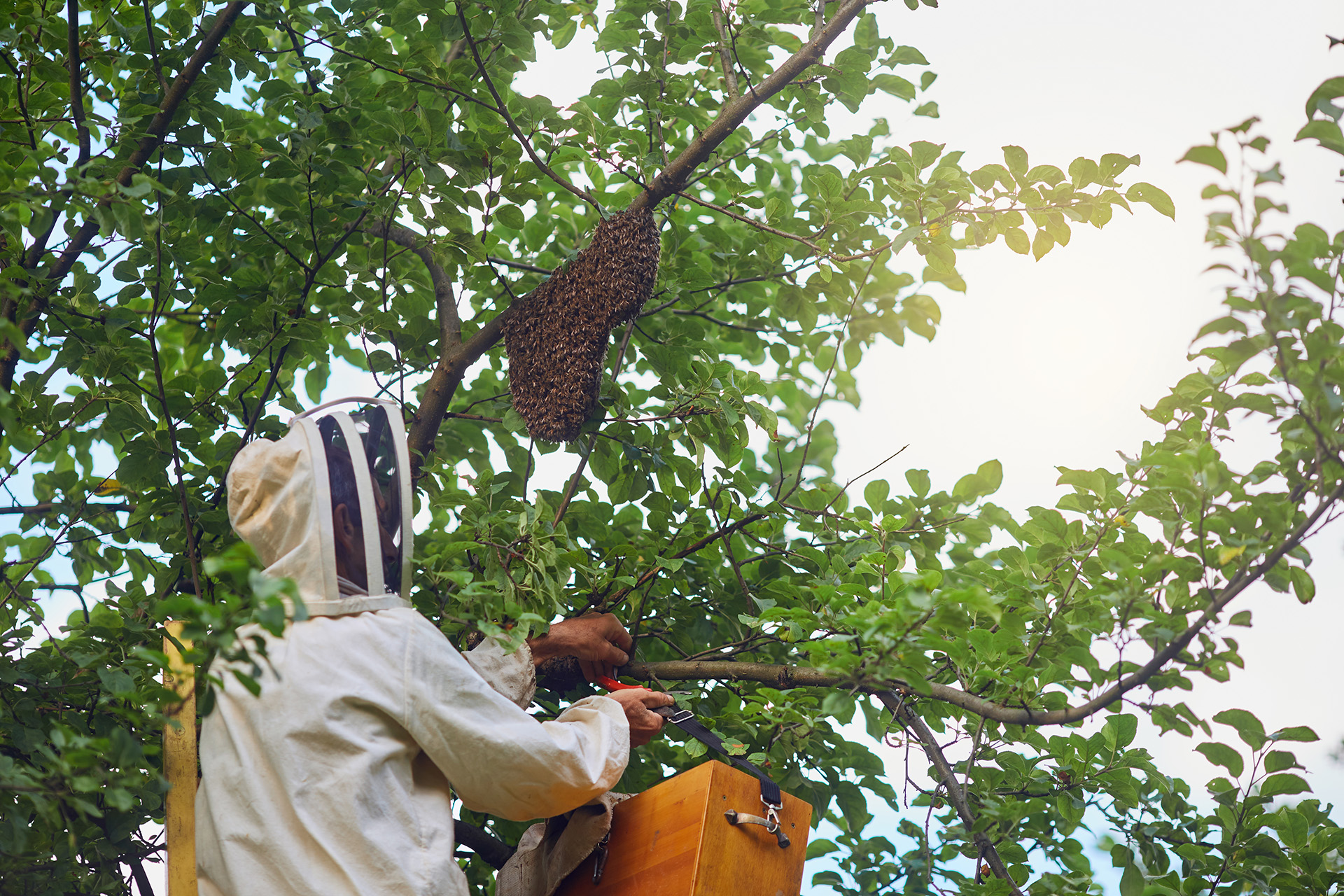
- Using ladders for roofline access
- Entering a loft space if required
Care is taken to avoid unnecessary disturbance before treatment begins.
Applying the treatment
The treatment is applied directly to the nest or entry point.
For visible nests:
- Treatment is applied to the structure itself
For hidden nests:
- Treatment is applied at the entry point so it is carried back into the nest
The goal is to ensure the treatment reaches the colony effectively without causing unnecessary agitation.
What happens to the wasps
After treatment:
- Wasps returning to the nest come into contact with the treatment
- Activity may continue for a short period
- The colony gradually becomes inactive
In most cases:
- Activity reduces significantly within a few hours
- The nest becomes inactive within 24–48 hours
What you should do during treatment
To keep things safe and straightforward:
- Stay indoors while treatment is being applied
- Keep windows and doors near the nest closed
- Keep children and pets away from the area
- Avoid watching too closely or approaching the nest
The process is usually quick, but it’s best to give the area space.
Aftercare and what to expect
Short-term activity
It’s normal to see some wasp activity after treatment. This does not mean it hasn’t worked.
You may notice:
- Wasps entering and leaving for a short time
- Reduced activity over the next day
- No activity after 1–2 days
Access restrictions
You’ll usually be advised to:
- Avoid the area for a period of time
- Keep distance from the entry point
- Not block or disturb the nest
This allows the treatment to work properly.
What about the nest itself?
In most cases:
- The nest is left in place
- It becomes inactive once the colony dies off
Removal is not always necessary, especially for hidden nests in lofts or wall cavities.
Situations that may take longer
Some nests may take slightly longer to become inactive, particularly if:
- The nest is very large
- It is deep inside a wall or roof void
- There are multiple entry points
You’ll usually be advised on what to expect based on the specific situation.
When follow-up may be needed
In some cases, further attention may be required if:
- Activity continues beyond the expected timeframe
- There are signs of a second nest
- The original nest was difficult to access fully
Most standard treatments resolve the issue without the need for additional visits.
Key takeaway
A professional wasp nest removal visit is designed to be:
- Safe
- Efficient
- Minimally disruptive
Understanding the process helps you know what to expect and how to keep your household safe while the treatment takes effect.
 Free advice